
From the bones and knuckles games in early Egypt to the latest VR immersion, we have long been playing games. Due to ongoing technical development, the level of realness for our make believe environments are changing (Valkenburg & Peter, 2006). Here we investigate concepts involved in learning and behaviour change for three game environments that each have a different way in which they make themselves more real to us.
- Alternate Reality Games
A multimedia platform of storytelling, collaboration required to solve challenges, persistent world, no avatar representation. - Massively Multiplayer Online
Avatar based interactions, persistent world, social interactions, both collaboration and competition with other players. - Exergames
Physical movement as game control, both with and without avatar representation, often used in rehabilitation/physical therapy settings.
Alternate Reality Games

Multiple elements make up an Alternate Reality Game (McGonical, 2003) and (Montola, 2005)
- The puppet master
- A rabbit hole or a trail head
- The curtain
- TING rhetoric
The puppet master is the game master or storyteller of the ARG environment. This is the person (or persons) weaving the players content in with the narrative and providing clues and challenges where appropriate. A starting point of an ARG is known as a ‘rabbit hole’ or ‘trail head’. The ‘rabbit hole’ is defined by Merriam-Webster’s dictionary as “A bizarre or difficult state or situation, usually used in the phrase down the rabbit hole. From the rabbit hole that Alice enters in Lewis Carroll’s Alice in Wonderland.” Usually such a starting point into the game is online. The division between the players and the puppet masters is dubbed the curtain, referring to the red velvet drapery a magician uses to hide the mechanisms behind his trickery so that the audience might stay in a state of wonder. The This Not a Game – or TING- rhetoric is maintained at the player-side of the curtain. Everything that the players interact with is real in the sense that it is functional; websites, places and persons referred to in the game play actually exist and can be interacted with by the players. Nowhere does the game describe itself as a game, the fiction of the alternate reality that is built in an Alternate Reality Game is maintained throughout.
“Players were never meant to believe the This Is Not a Game rhetoric… it was obviously a game. There was nothing we could do about that. What we could do was make it a game with an identity crisis. If I know it’s a game and you know it’s a game, but IT doesn’t know it’s a game, then we’ve got a conflict.” Elan Lee, lead game designer of ARG The Beast in McGonical, 2003.
Alternate Reality Gaming can be further defined by six key attributes (McGonical, 2004).
- Cross-media
- Pervasive
- Persistence
- Collaboration
- Constructive
- Expressive
The game play occurs across multiple media platforms; public phones, postal services, movie trailers, an episode of a television series, billboards and fax machines have all been used in ARGs. Often, some form of online presence or online entrance to the story is central to the game. The game play of an ARG is pervasive in the sense that it spreads itself into normal everyday life. The concept of a ‘magic circle’ defining a field of play is challenged by placing (part of) the game play in the real world and using the real world for the needs of the game play. When an ARG runs, it runs constantly, whether you as a single player are interacting with it or not. The game play is persistent; it does not wait for any one player. It will continue to run 7 days a week, 24 hours a day until the game has run its course. By providing challenges that are impossible to solve individually, the ARG forces collaboration as an integral part of any ARG experience. Such collaboration is also given shape by the required constructive nature of the environment. There is no ready-made platform for player interaction in an ARG. Communities are constructed by and for the player base. An ARG might require a platform to support and manage the necessary involvement of the player base but it does not provide it. Intertwined with the constructive nature is also the expressive nature of this game environment. Players create pieces of content as they build the game together and player created content is absorbed into the game play. There is a constant interaction between the players and the narrative of the game.
For example the ARG The Beast has been claimed to be the game that successfully introduced ARG’s to a larger public. This murder-mystery in a future setting intrigued players for 12 weeks in 2001. It was created as a promotion for the movie A.I. An example of a smaller ARG is Chain Factor. This puzzle based ARG started in the Numb3rs episode Primacy (aired first November 9th, 2007) in which players needed to find and crack several codes to stop the world’s economy from being destroyed. The Primacy episode featured short commercials to lure players to start playing at www.chainfactor.com, see Figure 1 for a screenshot of the website. As you can see in Figure 1 the game starts off with a fairly simple puzzle-game. Further game play included several clues and codes embedded in the Primacy episode. and clues in physical locations, see Figure 2 for an example. Other codes that unlocked ‘cheats’ could be found on billboards throughout the country. On December 12, 2007 the game was successfully ended by entering all ‘ShutdownKeys’ simultaneously on twelve specific computers in twelve different (physical) locations (Haring, 2010).
Massively Mulitplayer Online
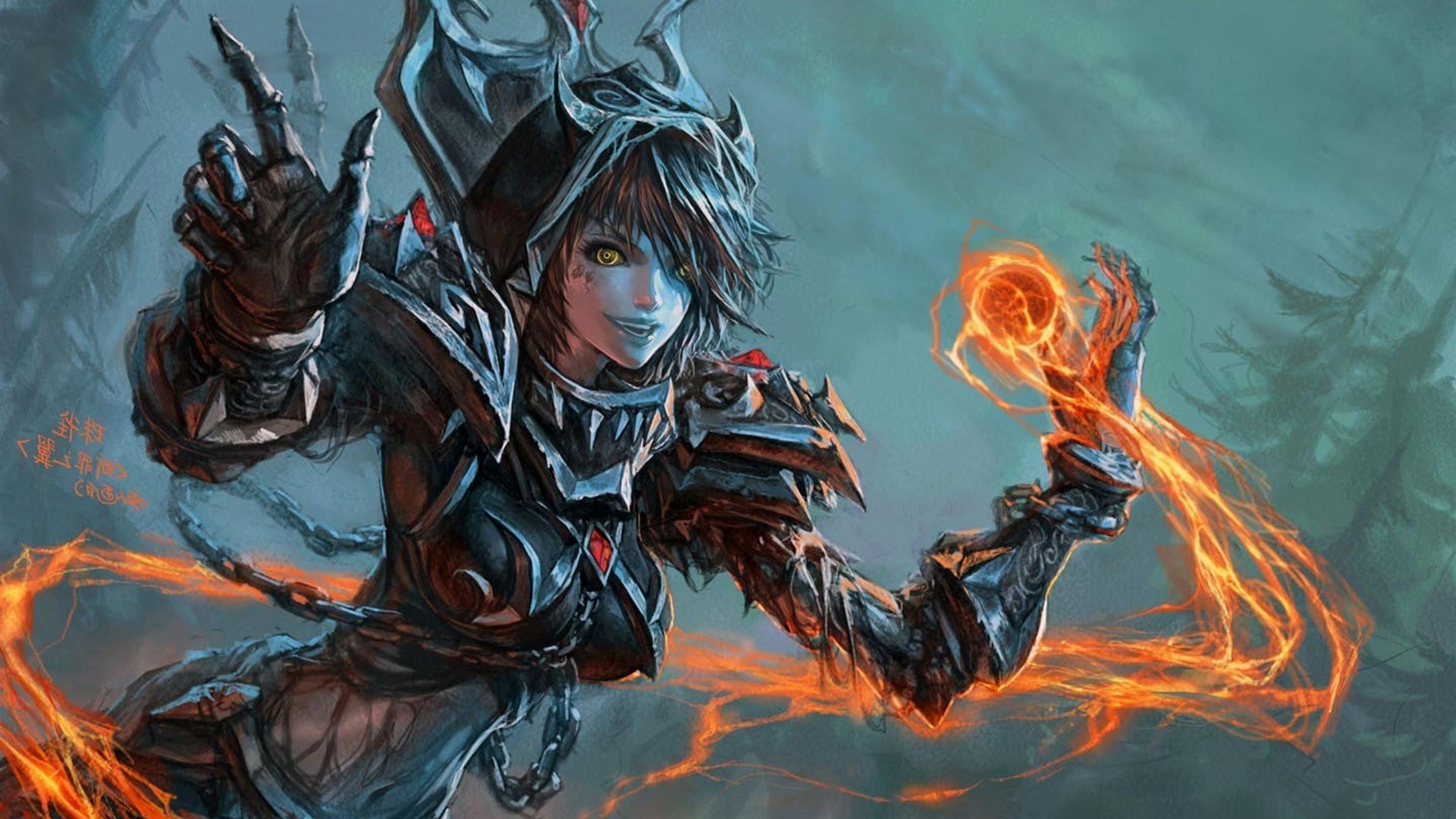
Massively Multiplayer refers to the vast amount of people that are simultaneously involved in this gaming genre. Online refers to the place where the game environment and all its players reside. MMOs exist “on and over the internet” (Chan & Vorderer, 2006). The combination of these two aspects comes with its own set of technical difficulties, involving the support needed for an online world in which every player can interact with the world and with other players. As technology develops the MMO environments have become more responsive to the players and can hold a large amount of players at any one time.
The genre of MMOs is characterised not only by its vast amount of players, but by that these players interact in a “single, integrated, persistent gaming world.” (Chu, 2008).
- Single world
- Integrated world
- Persistent world
All the players interact in a single and integrated world, where their actions have effect on other players, the environment or the overall narrative. This brings in the technical challenge of tracking and supporting the massive amount of players and their actions and keeping the virtual world updated accordingly for everyone- in real time. To lessen the burden of such massive data traffic a game is often run split over several servers, known as ‘shards’ (Chu, 2008). As with ARGs, the persistent world of an MMO does not wait for any one player to start or stop playing, the narrative and development of the game world continues regardless.
There are several MMO game genres, of which Massively Multiplayer Online Role Playing Games (MMORPG) are the most popular (Chu, 2008). This genre leans heavily on avatar development and in-game interactions between gamers and between gamers and Non Playing Characters (NPC). MMORPGs add physicality, social interaction, avatar-mediated play, vertical game play and perpetuity (Chan & Vorderer, 2006) to the persistence of any MMO.
“These Massively Multi-player Online Role Playing Games (MMORPG) are make believe universes in which real people interact with other real people through digital representations of themselves; millions of people participate in these worlds (Castronova, 2007)”
One famous MMORPGs is World of Warcraft. The players running around in such worlds spend – on average – 24 hours a week in their MMORPG, the vast majority is male (89%) and their average age is 26.7 years old (Yee, 2009). The time spent in this type of gaming environment sparked all sorts of concerns about social isolation. However, research has shown that playing a MMORPG increases social capital (Wellman, Haase, Witte, & Hampton, 2001).
MMOs have had much attention from researchers in the area of excessive online gaming, with concerns especially on addiction and mental disorders. The pervasive and highly social aspects of MMO – as well as the multimillion player base – raised theories and research on the addictive nature of this gaming genre (Kardefelt-Winther, 2014).
Exergames

In general terms ‘exergames’ are those games that are controlled by bodily movement. These games require an input that goes beyond using buttons or keys to exert influence over the game environment.
There was concern that games would make us less physically active. Video games have moved from the arcade games popular in the 1970’s and 1980’s into our living room and are now on mobile platforms and in our pockets. This has also meant that we went from playing games (mostly) while standing up, slamming on big push buttons and/or rattling a joystick to playing games (mostly) while sitting down and manipulating smaller buttons or keys with a finger (Bogost, 2005). By adding to our screen-time and our sedentary lifestyle, gaming was thought to be bad for your health and especially the health of young people (Vandewater, Shim, & Caplovitz, 2004). In a time when the problem of child-obesity is of epidemic proportions, these concerns seem relevant. Renewed attention was given to a different method of game interaction; still on a screen but obliging the player to move around in order to control the game. Exergaming seemed like a promising solution to the threatening gaming behaviours of our children
In order for exergaming to work, some sort of sensoring is required. Sensors that can capture our bodily movements became more advanced and cheaper – making their way from research and therapeutic settings into peoples’ homes. Exergames are now used voluntarily in many living rooms, where the physical interaction is not viewed as ‘exercise’ but the whole game experience is viewed as entertainment. Interacting with an exergame requires a certain expenditure of energy – more than a sedentary screen based interaction would – but not to the same amount as the original physical interaction that is being mimicked in the game environment (Daley, 2009).
Comparing three environments
| ARG | MMO | Exergame | |
| Persistent | X | X | |
| Avatar based interaction | / | / | |
| Physical activity | / | X | |
| Magic circle | X | X | |
| Social interaction | X | X | / |
| Presence high | Self | Social | Spatial |
| Virtual environment | / | X | |
X= always /=sometimes
Persistence we have seen explained in both the ARG and MMO descriptions as an important characteristic of those games; the environment does not wait for any ones player interactions. Avatar based interactions create room for another level to interact with the game; through a self-developed persona. Both MMOs and Exergames allow for such virtual representations, although neither game genre uses it exclusively. Physical activity is core to Exergaming and is usually a part of an ARG – one has to get up and do something in the real world – but it is not mandatory to be physically active in order to interact with the ARG. I have discounted the button pushing or typing on a keyboard in the MMO environment as physical activity.
References
Bogost, I. (2005). The rhetoric of exergaming. Proceedings of the Digital Arts and Cultures (DAC).
Chu, H. S. (2008). Building a simple yet powerful MMO game architecture, Part 1: Introduction
A simple, elegant implementation that delivers the functionality needed by any MMO game (pp. 10): IBM Developer Works.
Yee, N. (Producer). (2009, 07/07/2009). The Daedalus project. Retrieved from http://www.nickyee.com/daedalus/